Se afișează postările cu eticheta Fiat. Afișați toate postările
duminică, 15 mai 2016
Fiat 500 Mare by Holiday 1960 - World Of Classic Cars -
As 1960s jet-setters partied down at sandy beaches all over the world, they were most often seen not in their Ferraris or Maseratis but behind the wheel of a Fiat Jolly. The Jolly, based upon the reliable mechanicals of the Italian “people’s car”, the 500 featured dune buggy-like bodywork by Ghia of Turin, with open sides, a simple surrey top, and wicker seats that would have looked at home at an English garden party. It was often finished in brilliant, shiny colours, making it all the better to match one’s swimsuit or yacht club burgee. Jollies were all the rage on the streets of resort towns, and if you were really a member of the jet-set, you carried one upon the deck of your yacht as a tender. Both wealthy vacationers and fashionable resorts bought them in droves.
Approximately 20 years ago, Giovanni Vernagallo’s Carrozzeria Holiday (now Vernagallo Stile) took up the tradition and began converting vintage Fiat 500s into the Mare, a beach car in the style of the Jolly, but less the wicker seats. They continue in this endeavour today, selling cars exclusively to resorts and a shortlist of VIP clients for whom there is still simply no substitute.
The 500 Mare presented here, converted from a 500 Giardiniera, was the recipient of a thorough restoration to ensure trouble-free cruising around the French Riviera. According to the consignor, it is believed that only 10 such examples were based on the Giardiniera estate wagon, giving this delightful beach car ample room for one’s towels and snorkel gear. It is in excellent condition and finished in a stunning and easy-going colour combination that will certainly get noticed around town.
luni, 18 aprilie 2016
Fiat 1500 B Berlinetta by Touring 1938 - World Of Classic Cars -
![]() |
| Fiat 1500 B Berlinetta by Touring 1938 |
According to Carlo Felice Bianchi Anderloni and Angelo Tito Anselmi’s Touring Superleggera: Giant Among Italian Coachbuilders, several prototypes for the Fiat 1500 Touring Berlinetta were produced, but the limited run of cars resulted in combining the trim and design details of all of them. However, the basic shape remained the same: a fluid, elegant coupé, along the lines of Touring’s famous Berlinetta design for the Alfa Romeo 6C 2500.
The 1500 B presented here, chassis number 026981, benefits from known ownership history since new. It was originally delivered on 11 October 1938 to Mr Attilio Chiolero, of Torino, and licensed as TO 52635. This registration was changed to TO 63322 on 26 April 1943 for its second owner, Angelo Ferrari, who was also from Torino.
![]() |
| Fiat 1500 B Berlinetta by Touring 1938 |
In 1945, the car next passed to Mr Angelo Grasso, of Milan, and after the war, on 12 June 1946, it was re-registered as MI 87895 and sold to a fellow Milanese, Eraldo Rizzolio, who at the time was a resident of Johannesburg, South Africa, but kept the car at the Royal Automobile Club of Milan. It was sold again on 12 February 1949 to Mr Luigi Brusi, of Ravenna. Mr Brusi passed the car in February 1967 to Mr Angelo Gatti, of Faenza. Mr. Gatti held on to the Fiat until 13 May 1992, when it was acquired by Edoardo Magnone, of Dorzano, who owned the beautiful Fiat until recently.
![]() |
| Fiat 1500 B Berlinetta by Touring 1938 |
The 1500 B was restored some time ago in its present and elegant green livery, with its elegant rich brown interior and front bucket seats also receiving some upgrading. Typical of Fiat and Touring in this era, the hardware throughout is richly detailed and fascinating, as is the trim that decorates the exterior. Records indicate that the car’s original engine was number 027452, but another correct 1500 B engine has since been installed.
vineri, 15 aprilie 2016
Fiat 8V Cabriolet by Vignale 1953 - Classic Cars -
![]() |
| Fiat 8V Cabriolet by Vignale 1953 |
Of all the famed Italian automakers, Fiat is not normally recognised as a builder of lavish coachbuilt grand touring cars. The Italian automaker’s first engines were four-cylinder units, often of gargantuan proportions. Fiat produced its first six-cylinder engine in 1907 and even a V-12 from 1921 to 1922. However, it was not until 1952 that Fiat would produce an engine with eight cylinders, and the chassis and bodies it resided in were just as special as the engine.
This 8V model, or Otto Vu in Italian, was built for two years only, in 114 examples, and it remains one of the marque’s most legendary motor cars to this day. It was the star of the Geneva Salon in March 1952, and it goes without saying that this new Fiat got lots of attention from the motoring press. Road & Track called it “the biggest surprise of the year”, and The Motor remarked that “the last thing which had been expected from Italy’s largest car factory was a truly streamlined 2-seater saloon”. With its potent new powerplant, which was clothed by bodies designed by the world’s finest coachbuilders, everyone knew that this was truly a special automobile in every sense of the word.
CHASSIS NUMBER 000050
![]() |
| Fiat 8V Cabriolet by Vignale 1953 |
According to Tony Adriaensens’s book Otto Vu, 8V chassis number 000050 was exported as a chassis on 8 July 1953 to the renowned Italian coachbuilder Alfredo Vignale. Adriaesens notes that Vignale would work with his stylist, the talented Giovanni Michelotti, to discuss potential designs, and then the two would work together to evolve and “flesh out” a final automobile.
This process resulted in Vignale bodying ten 8V chassis, all to Michelotti designs, of which the car offered here, number 000050, is the only cabriolet and one of very few open bodies produced for the 8V by any coachbuilder. The drawing for the cabriolet notes that it was an exclusive design created for a Sig. Leone. It bears a remarkable resemblance to a similar coupé built by Vignale on another 8V chassis, but it has the breezy nonchalance that only a convertible top can offer.
Whatever became of the mysterious Sig. Leone is unknown, but the car is believed to have actually been delivered new in the United States, where photographs were taken of it in Florida in late 1954. It is believed that its original owner was Sunshine State resident John Harrigan, who took delivery of it in September of that year. Photographs show that the car was originally fitted with larger, heavier bumpers, a different dashboard arrangement, and painted wire wheels.
In the early 1990s, the attractive 8V was discovered in the Utah desert by well-known enthusiast Don Williams. Mr Williams was very involved in the 8V market at the time, and he did not hesitate to purchase the car and have it restored in its present livery: a classic Italian racing red with a tan leather interior and chrome wire wheels. In a recent telephone conversation, he noted that the car, as-purchased, had no engine, which was typical of 8Vs sold in America, where service for the complex V-8s was not readily available. He acquired another engine, number 000184, which is believed to have been a factory replacement engine from another chassis, and he installed it in the car.
![]() |
| Fiat 8V Cabriolet by Vignale 1953 |
It is important to note that, according to Mr Williams, when found, the car had its present delicate competition-style “bumperettes” and redesigned dashboard arrangement, indicating that these modifications were performed by an early American owner. A five-speed Alfa Romeo manual transmission was also fitted, and it is still installed today, as it is a desirable and suitable replacement for the fragile and finicky original Fiat four-speed unit.
joi, 10 martie 2016
Fiat 131 Abarth Supermirafiori 1978 - World Of Classic Cars -
luni, 7 martie 2016
Fiat Barchetta 2005 - World Of Classic Cars -
![]() |
| Fiat Barchetta 2005 |
Fiat's Barchetta (Italian for 'little boat') was developed between 1990-94 under project name 'Tipo B Spider 176' culminating in a two door roadster with deft and distinctive styling flare. Powered by the well proven and lively 1.7 litre, four-cylinder, 16v engine, the Barchetta was good for 130bhp and 124mph. Whilst being no slouch, the Barchetta exhaust boasts a pleasing rasp and the driving experience gives the sensation that the car is even faster than it really is. Sold only in lefthand drive, bankruptcy ceased manufacturing by Maggiora in May 2002 and Fiat resurrected the Barchetta with a Phase Two model during 2004 built at its Mirafiori plant in Turin before ending production soon after in June 2005 .
duminică, 6 martie 2016
Fiat Nuova 500 F Berlina 1967 - World Of Classic Cars -
![]() |
| Fiat Nuova 500 F Berlina 1967 |
The Nuova 500 was designed by Dante Giacosa, who was also responsible for its predecessor, the Cinquecento or Topolino (little mouse) as the public immediately christened it. The Nuova is a masterpiece of packaging, the rear-wheel drive, rear-engined layout leaving a remarkably uncluttered cabin with adequate room for four passengers, despite the diminutive length of just 9.74ft. At its introduction in 1957 the little Fiat was powered by a twin-cylinder engine of 479cc and just 13bhp, but by the time of the later 500 F the capacity had grown to 499.5cc and the output to 22bhp - sufficient for a maximum speed of around 60mph combined with a fuel consumption of over 50mpg.
miercuri, 24 februarie 2016
Fiat 500F Berlina 1972 - World Of Classic Cars -
![]() |
| Fiat 500F Berlina 1972 |
vineri, 19 februarie 2016
Fiat 500 L 1971 - World Of Classic Cars -
| Fiat 500 L 1971 |
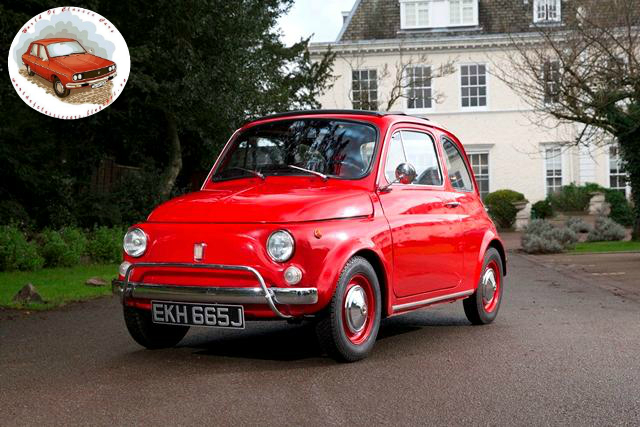
The Fiat 500 was produced between 1957 and 1975 with limited production of the Fiat 500K estate continuing until 1977. It was designed by Dante Giacosa and, despite its diminutive size, the 500 proved to be an enormously practical and popular vehicle throughout Europe, capturing the hearts and minds of the public. Launched as the Nuova (new) 500, it was marketed as a cheap and practical town car. Measuring only three metres long and originally powered by a tiny 479cc two-cylinder, air-cooled engine, the 500 redefined the term 'small car' and is considered one of the first city cars.
luni, 15 februarie 2016
Fiat 508 Balilla Coupé 1933 - World Of Classic Cars -
![]() |
| Fiat 508 Balilla Coupé 1933 |
Based on the highly successful 508 Balilla saloon - the first Fiat of the inter-war years to be named as well as numbered - the 508S Balilla Sport competition version was inspired by an original design by Carrozzeria Ghia. Fiat purchased the rights and manufactured two versions; the Coppa d'Oro (Gold Cup) and lightweight Mille Miglia, named after successes gained in these demanding long distance events. Clothed in stylish open two-seater bodywork with finned tail, the original Balilla was powered by a tuned version of the saloon's 995cc four-cylinder side valve engine. The latter drove the rear wheels via a three-speed gearbox and was installed in a cruciform braced chassis equipped with Lockheed hydraulic brakes and wire wheels. Introduced in 1934, the second series improved on this successful formula, adopting a four-speed synchromesh gearbox and an overhead-valve engine producing 46bhp. Despite its age, the Balilla Sport was still winning races in the immediately post-war years, adding to a formidable reputation built on numerous victories in classic events in the pre-World War 2 era, including the Mille Miglia, Monte Carlo Rally, Targa Florio, Spa Francorchamps 24-Hour, Ulster TT and Le Mans.
Fiat 500 L 1971 - World Of Classic Cars -
![]() |
| Fiat 500 L 1971 |
The Fiat 500 is a car produced by the Fiat company of Italy between 1957 and 1975, with limited production of the Fiat 500 K estate continuing until 1977. The car was designed by Dante Giacosa, and despite its diminutive size, the 500 proved to be an enormously practical and popular vehicle throughout Europe capturing the hearts and minds of the public until production of the 500 ended in 1975.
Launched as the Nuova (new) 500 in July 1957 it was marketed as a cheap and practical town car. Measuring only 3 metres long, and originally powered by a tiny 479 cc two-cylinder, air-cooled engine, the 500 redefined the term ""small car"" and is considered one of the first city cars.
![]() |
| Fiat 500 L 1971 |
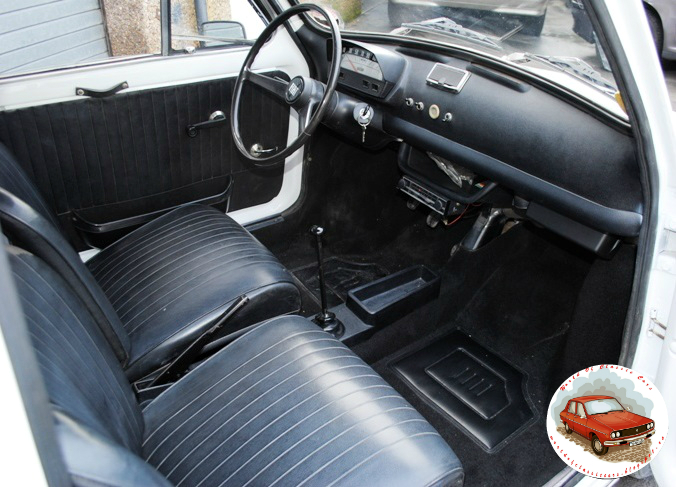
The 'L' or Lusso penultimate model like the car offered here today was produced between 1968 and 1972 featured a much modernized interior including a renewed dashboard which brought the Fiat 500 up to date. Greater comfort and style were provided in this new model for the new generation.
sâmbătă, 6 februarie 2016
Fiat Vignale Samantha Coupe 1969 - World Of Classic Cars -
![]() |
| Fiat Vignale Samantha Coupe 1969 |
One of the most illustrious of Italian coachbuilders, Carrozzeria Vignale, had been founded in 1948 by Alfredo Vignale. Enzo Ferrari's favoured coachbuilder during the Maranello manufacturer's formative years, Carrozzeria Vignale also designed and built cars for Lancia and Maserati among others and in the 1960s, branched out into automobile manufacture in its own right. For Fiat, Vignale built show models, prototypes and some limited edition models. Based on the contemporary Fiat 124 and 125 models, the 1.6-Litre, Vignale-bodied Samantha was built in small numbers in the late 1960s. Vignale's sleek coupé body had very fluid lines, thanks to the recessed, 'pop up' headlights, yet nevertheless afforded comfortable seating for four and a decent amount of luggage space. With
![]() |
| Fiat Vignale Samantha Coupe 1969 |
100bhp on tap, delivered via a five-speed gearbox, the Samantha was similar in performance to the 125S donor car, with a 0-60mph time of 13 seconds and a top speed of 106mph. Production run of the Samantha 125S is estimated at approximately 100, and these cars were not distributed through Fiat main dealers, leaving foreign importation in the hands of independent specialists. Only a relative handful are believed to have survived, making the Samantha 125S one of the rarest twin-cam Fiats of the period. We could thank Greek casino tycoon, Frixos Demitriou for the right hand drive Samantha, as it is reputed that in exchange for a gambling debt, he went to visit the Vignale factory and was offered 200 of the company's cars, configured in right hand drive, for resale in the UK. A mixture of Gamines, 850s, 124 Evelines and 125 Samanthas were subsequently built and shipped, but in the end, the venture failed and a fleet of unsold cars followed Demitriou back to Cyprus. In 1970 Demitriou died under bizarre circumstances, when an army tank ran over his Vignale-Fiat while he was still inside!! The incident followed Alfredo Vignale's own unexplained passing, also in a Vignale-Fiat, in 1969 just three days after he had sold the Vignale factory to De Tomaso (Ferrari's bitter rivals), for preparing their Ghia bodied Pantera for production.
vineri, 5 februarie 2016
Fiat 126 Bis 1989 - World Of Classic Cars -
| Fiat 126 Bis 1989 |
The Fiat 126 is a city car introduced in October 1972 at the Turin Motor Show as a replacement for the now legendary Fiat 500. The Fabryka Samochodów Małolitrażowych (known with acronym FSM) was a Polish car factory born from an agreement between the FSO and Fiat in the 1970s for the construction of a new model, the Polski Fiat 126p, a Polish version of the Fiat 126. For the project, a new manufacturing plant was opened in Tychy and was active between 1972 and 1991 when it was privatised and Fiat Group took control.
sâmbătă, 23 ianuarie 2016
vineri, 15 ianuarie 2016
Fiat 500L 1970 - World Of Classic Cars -
| Fiat 500L 1970 |
The Fiat 500 was produced between 1957 and 1975 with limited production of the Fiat 500K estate continuing until 1977. It was designed by Dante Giacosa and, despite its diminutive size, the 500 proved to be an enormously practical and popular vehicle throughout Europe, capturing the hearts and minds of the public. Launched as the Nuova (new) 500, it was marketed as a cheap and practical town car. Measuring only three metres long and originally powered by a tiny 479cc two-cylinder, air-cooled engine, the 500 redefined the term 'small car' and is considered one of the first city cars.
| Fiat 500L 1970 |
| Fiat 500L 1970 |
| Fiat 500L 1970 |
joi, 9 aprilie 2015
Classics For Sale - World Of Classic Cars -
sâmbătă, 28 martie 2015
Fiat Dino - World Of Classic Cars -
![]() |
| Fiat Dino Berlinetta 1970 |
In the early 1960's, Ferrari needed a 2.0-litre production-based engine for the new Formula 2, and conceived the mid-engined Dino to provide the necessary basis. Faced with the daunting task of building 500 units per annum to meet homologation requirements, Ferrari turned to Fiat for assistance; the resulting agreement for the latter to build the Dino's four-cam V6 engine leading to a spin-off model for FIAT. The Fiat Dino was introduced at the Turin Motor Show in 1966 alongside the Dino Berlinetta GT, later to become the Ferrari Dino 246. Powered by a shared four camshaft, two litre, V6 engine, both cars benefitted from a racing pedigree that went back to Ferrari's Dino 166P sports-racing unit and their 246 Grand Prix engine. The V6 engine's capacity was increased to 2,418cc in 1969, when a ZF five-speed gearbox and trailing-arm independent rear suspension were among many improvements adopted. The Dino model was built as either a Bertone designed coupé or a sleek Spider from Pininfarina. However, it is the Spiders, both in 2.0 and 2.4 Litre guise, that have become most sought after amongst collectors. A stylish conveyance for four, the Fiat Dino raced to 60mph in around 7 seconds and could exceed 130mph whilst making all the right Ferrari-esque noises. Production ceased in 1972.
vineri, 27 februarie 2015
Fiat Coupé - World Of Classic Cars -
![]() |
| Fiat Coupé 20v Turbo 1998 |
The Fiat type 175, officially titled the Coupé Fiat was produced between 1993 and 2000 and remembered for its distinctive, angular design with unique scalloped side panels designed by Pininfarina.
On its launch in 1993, the Coupé was available with a four cylinder, 2.0 L 16V engine, in both turbo and normally aspirated versions. Both engines were later versions of Fiat's twin-cam design and inherited from the Lancia Delta Integrale, 1996 brought in a 1.8 L 16V engine along with a 2.0-litre 5-cylinder 20V, and a 5-cylinder 2.0-litre 20V turbo. With a 0-62mph time of 6.5 seconds and a top speed 155mph the Fiat coupe was one of the quickest front wheel drive production cars of its day.
It is rumored that Michael Schumacher was the original owner of the first special edition LE No. 0001, however when the question was raised to him personally he confirmed he had owned one, but a red one, while LE No. 0001 was actually a Crono Grey model.
sâmbătă, 1 noiembrie 2014
Fiat 600 Multipla 1957 & Fiat 600 Jolly 1961 - World Of Classic Cars -
![]() |
| Fiat 600 Multipla 1957 & Fiat 600 Jolly 1961 |
When it came to versatility, few automakers of the 1950s and 1960s could compete with Italian manufacturer Fiat. The tiny 500 and 600 models were some of the most popular automobiles in Europe, as they were ideal for economy-minded clients still rebuilding after World War II, yet they still had a stylish and almost universal appeal. Their charming appearance led them to be used as the basis for numerous special variations, as they were produced by both the Fiat factory and private coachbuilders, and they were enjoyed all over the world.
THE FIAT 600 MULTIPLA
![]() |
| Fiat 600 Multipla 1957 |
The Multipla was introduced as a “station wagon” version of the 600, and it was intended to “multiply” the serviceability of the 600 for either family motoring or business use. It was designed around the model’s rear-mounted, water-cooled engine, which prevented the use of a traditional square back with a tailgate. Engineer Dante Giacosa relocated the driver over the front wheels and provided two large side doors for loading cargo. Both the front and rear doors were hinged at the B-pillar for easy access, and the rear seat could fold flat to provide space for carrying goods. An auxiliary radiator was mounted in the front, and the chassis utilized wishbone and coil-front suspension, unique gear ratios, worm-and-roller steering, and a slightly larger fuel tank.
As the Multipla was distinctively styled and instantly recognizable, it became one of the icons of 1960s Italian transportation, and many remained in service for years all over the world. It is recognized today as the predecessor of the modern passenger van and cross-over vehicle, as it combines the best assets of a commercial hauler and a comfortable family sedan.
THE FIAT 600 JOLLY
![]() |
| Fiat 600 Jolly 1961 |
While the Multipla was all about practicality, the Jolly was meant for all-out fun. It was the brainchild of Fiat chairman Gianni Agnelli, who desired a small car that could be carried aboard his 82-foot ketch, Agneta, and easily lowered over the side for local transportation at various Mediterranean ports of call. Agnelli’s yacht tender, an open-air 500 with wicker seats, cut-out doors, and a fringed surrey top, proved so popular that it was put into limited production by Italian coachbuilder Ghia. Through the Jet Age, it was the vehicle in which to “see and be seen” at the world’s most fashionable resorts.
The majority of Jollys were built on the 500 chassis. The four-cylinder 600 versions are considerably rarer, particularly in the United States, and they are fiercely sought after by Fiat enthusiasts.
A MATCH SET
![]() |
| Fiat 600 Multipla 1957 & Fiat 600 Jolly 1961 |
The cars shown here were both acquired by a noted California collector of coachbuilt and unusual Fiats, who elected to have them restored in their present matching livery. The no-expense-spared restorations were recently completed by a well-known West Coast microcar expert, and they resulted in the Fiats being painted a striking Teal Green with polished cream wheels. The Multipla was equipped with a custom-made luggage rack, which easily accommodates extra baggage for summer trips with the kids or a few golf bags for a trip out to the green!
miercuri, 16 iulie 2014
Fiat Giannini 650 NP 1972 - World Of Classic Cars -
![]() |
| Fiat Giannini 650 NP 1972 |
Utilising the later 500L as its basis, the Fiat Giannini 650 NP nearly doubled factory power to 35 horsepower from its enlarged 652-cubic centimetre engine. A modified iron camshaft helped supply enough power to motivate the little car to 135 km/h, which was a 35 km/h increase over stock. Other items, like special wheels, disc brakes, sporting seats, and various chassis stiffening elements, further made the 650 NP into a serious performance vehicle.
This particular car was raced successfully during the 1977, 1978, and 1981 season, winning the 700 Italian Championship class during the 1977 and 1978 season. During this time, the car was driven by Sauro Montale, who was the Italian Kart champion, and was prepared by Giuseppe Ciarcelluti. In the 1980 season, the car came in 2nd in the Championship, being driven by Salvatore Temperino, who subsequently purchased the car.
![]() |
| Fiat Giannini 650 NP |
The current owner bought the car in 1990 and commenced a complete restoration at the Giannini workshop in Rome. The engine and gearbox was rebuilt.
Abonați-vă la:
Postări (Atom)