Se afișează postările cu eticheta Lotus. Afișați toate postările

sâmbătă, 16 aprilie 2016

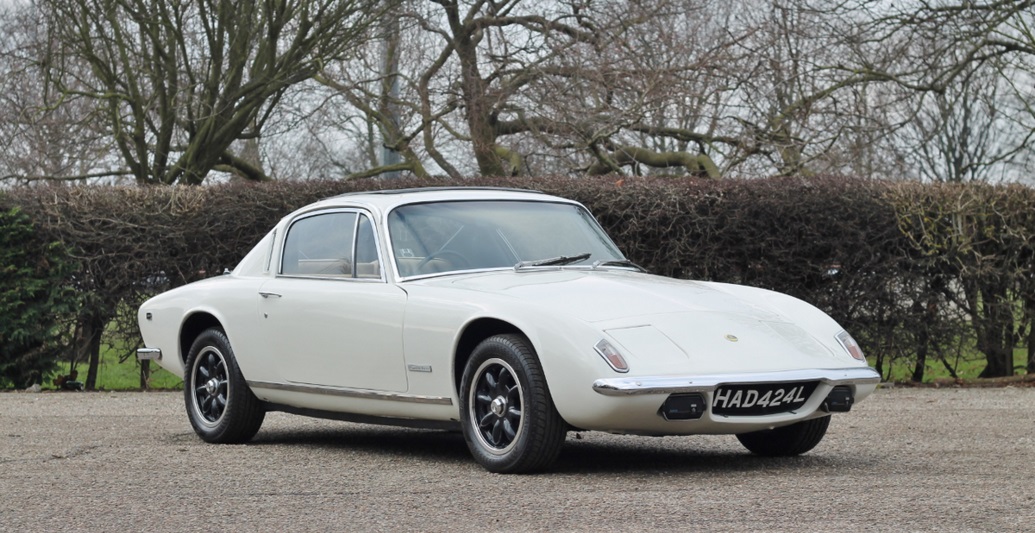
Lotus Elan Plus 2S 1972 - World Of Classic Cars -

Lotus Elan Plus 2S 1972
Ronnie Peterson.It is virtually impossible to describe the affect this young, good looking, quiet and shy but seriously talented Formula 1 driver has had upon, not only the aficionados of the sport, but the public in general, creating a huge ripple of affection that is still felt today by the huge fan base that still exists. Nicknamed Super Swede, Ronnie Peterson rose from karting to Formula 3 to become European Formula 2 Champion in 1972 and came closest to winning the Formula 1 World Championship in 1973 and 1978. Peterson's first Grand Prix was in 1970 at Monaco driving for the Colin Crabb privateer team, Antique Automobiles Racing Team then progressing to drive for the March Team in 1971. In 1973, Ronnie signed for the John Player Team Lotus, partnering Emerson Fittipaldi, a team led by the ever-charismatic Colin Chapman with Peterson achieving his first win in a Lotus 72 at the 1973 French Grand Prix held at the Paul Ricard circuit. Three further wins that year led Peterson to third in the Championship. By 1975, the Lotus 72 was showing its age resulting with Peterson signing for Shadow; however, Chapman convinced him to stay at Lotus, promising faster development of the Lotus 77 with Peterson driving the car in 1976 before rejoining March Engineering and winning the Italian Grand Prix. After a short spell with Tyrrell, Peterson returned to the John Player Team Lotus for the 1978 season winning the South African and Australian Grand Prix with his team mate, Mario Andretti, who won the Championship that year. Ronnie Peterson's enduring legacy owes much to his spectacular sideways style and he is still regarded by many as one of the fastest drivers in F1 history. Peterson's death was as unfortunate as it was tragic. After crashing at the start of the 1978 Italian Grand Prix he was pulled from his burning Lotus 78 by fellow drivers and taken to hospital with badly broken legs. A complication that night led to an embolism that robbed F1 of its hardest charger.
Lotus Elan Plus 2S 1972

The Lotus Elan Plus 2S 130/5 - chassis #1.Introduced in 1967, the Elan Plus 2 (factory designation Type 50) had an increased wheelbase over that of its predecessor that allowed the incorporation of two occasional rear seats. The glass fibre bodyshell is bolted to a steel backbone chassis to which the engine and transmission are bolted making this a lightweight and immensely strong platform for its high performance engine and nimble handling characteristics. The model had several improvements during its life and, in 1971, a big valve head was added improving performance furthermore. Significantly, in October 1972, a five speed gearbox was added, the model designation becoming the Elan Plus 2S 130/5; the Plus 2 relating to two occasional rear seats, the S referring to the Sprint specification engine, the 130 referring to horsepower and the 5 to the five-speed gearbox.

joi, 10 martie 2016

Lotus Elise S1 1998 - World Of Classic Cars -

Lotus Elise S1 1998

The Lotus Elise is a two-seat, rear-wheel drive, mid-engined roadster conceived in early 1994 and released in September 1996. It has a hand-finished fibreglass body shell atop its bonded extruded aluminium chassis that provides a rigid platform for the suspension while keeping weight and production costs to a minimum but capable of speeds up to 150mph. The Elise was named after Elisa, the granddaughter of Romano Artioli who was chairman of Lotus and Bugatti at the time of the car's launch. The car represented a return by Lotus to simple and lightweight sports cars after several years producing the increasingly heavy and luxurious Lotus Esprit.

luni, 29 februarie 2016

Lotus Exige Sport 350 Photoshoot - World Of Classic Cars -

Lotus Exige Sport 350

duminică, 14 februarie 2016

Lotus Elan +2 1967 - World Of Classic Cars -

Lotus Elan +2 1967

The original Elan was introduced in 1962 as a roadster, although an optional hardtop was offered in 1963 and a coupé version in 1965. The two-seat Lotus Elan replaced the elegant, but unreliable and expensive to produce, Lotus Elite. It was the first Lotus road car to use the, now famous, steel backbone sub-frame with a fibreglass body. The Elan embodied the Colin Chapman minimum weight design philosophy. It was technologically advanced with a Lotus-Ford twin-cam, 1558cc engine, four-wheel disc brakes and four-wheel independent suspension. The Elan +2 was introduced in 1967 with a longer wheelbase and two more rear seats. It was a fast and agile sporting coupé with very elegant lines. It combined the performance and reliability of the Elan Coupé with genuine 2+2 passenger comfort. With less than 1200 of these cars on the roads today, their relative rarity, beautiful lines, impressive performance and practicality are the main factors for the rising interest in these cars among collectors.

vineri, 12 februarie 2016

Lotus Esprit Turbo 1988 - World Of Classic Cars -

Lotus Esprit Turbo 1988

The Lotus Esprit built between 1976 and 2004 was unveiled in 1972 as a concept car and was a development of a stretched Lotus Europa chassis. It was among the first of designer Giorgetto Giugiaro's polygonal 'folded paper' designs. Originally, the name Kiwi was proposed but, in keeping with the Lotus tradition of having all car model names start with the letter 'E', the name became Esprit.
Introduced in April 1981, the Turbo Esprit and Series III Esprits marked a necessary consolidation; both new models had a common chassis, inheriting much of the configuration of the Essex cars whilst body production was based on a single common set of moulds. The SIII continued to use the 2.2 litre, type 912 engine, whilst the Turbo Esprit reverted to a less complex wet-sump lubrication system, retaining the power and torque outputs of its dry-sump predecessor. The interior for both cars was revised and featured new trim; combined with changes to the body moulds this resulted in more headroom and an enlarged footwell. Externally, the Turbo Esprit retained the full aerodynamic body kit of the Essex cars and featured prominent 'Turbo Esprit' decals on the nose and sides.

joi, 11 februarie 2016

Lotus Elise S1 2000 - World Of Classic Cars -

Lotus Elise S1 2000

The Lotus Elise is a two-seat, rear-wheel drive, mid-engined roadster conceived in early 1994 and released in September 1996. It has a hand-finished fibreglass body shell atop its bonded extruded aluminium chassis that provides a rigid platform for the suspension, while keeping weight and production costs to a minimum. The roadster is capable of speeds up to 150mph. The Elise was named after Elisa, the granddaughter of Romano Artioli who was chairman of Lotus and Bugatti at the time of the car's launch. The car represented a return by Lotus to simple and lightweight sports cars after several years producing the increasingly heavy and luxurious Lotus Esprit.

Lotus Europa S2 1970 - World Of Classic Cars -

Lotus Europa S2 1970

The Lotus Europa is a two door mid-engined GT coupé manufactured from 1966 to 1975. In 2006 Lotus began production of a totally new, Lotus Elise-derived design, a mid-engined GT coupé named Europa S. The original Europa used Lotus founder Colin Chapman's minimalist steel backbone chassis that was first used in the Lotus Elan whilst also relying on fibreglass moulded body for structural strength. The Europa was based on a prototype built to compete for Henry Ford II's contract to build a Le Mans racer in the early 1960's. The four-wheel independent suspension was typical of Chapman's thinking; the rear suspension was a modified Chapman strut as used for his early Formula racing car designs. The forward radius arms were increased in size and rigidity to act as a semi-wishbone. The car's handling prompted automotive writers to describe the Europa as the nearest thing to a Formula car for the road.

luni, 8 februarie 2016

Lotus Elan +2 130S 1971 - World Of Classic Cars -

Lotus Elan +2 130S 1971

Upon its launch in 1967, the Lotus Elan +2 fitted very snugly between British sports car manufacturers such as Marcos, TVR and major manufacturers such as Triumph and MG. The Elan +2 was a development and evolution from the original Elan of 1962 and saw a totally new closed coupé body designed to accommodate a couple of children or useful storage for shopping. The two Elans, the original still being produced alongside the +2, had many interchangeable parts except for the body; this was a benefit to the +2 as the mechanical parts had proven very reliable. The Lotus Elan +2 was also sold in kit form, as was the original Elan, but to get away from the heritage of kit cars, Lotus introduced an improved Elan a year later which was only available to buy factory built. The improvements were a more luxurious interior and fog lamps fitted under the front bumpers, and the vehicle was designated the Lotus Elan +2S. The next major change was in 1971 when a big valve engine was offered, resulting in the Lotus Elan +2 130S, with another option of a very attractive metal-flake roof paint job. The last major change was in 1972 when a five speed gearbox was fitted turning the car into the Lotus Elan +2S 130/5.

Lotus Evora 2010 - World Of Classic Cars -

Lotus Evora 2010

The Lotus Evora is based on the first all-new vehicle platform from Lotus Cars since the introduction of the Elise in 1995; of which the Exige introduced in 2000 and the 2006 Europa S are both derivatives. The Evora is the first product of a five year plan started in 2006 to expand the Lotus lineup beyond its current track-specialised offerings with the aim of making the Evora a somewhat more practical road car that would appeal to the mainstream. As such it is a larger car than recent Lotus's with an estimated curb weight of 1,350kg. It is currently the only Lotus model with a 2+2 configuration although it has been announced that it will also be offered in a two-seater configuration, referred to as the 'Plus Zero' option. It is also the only 2+2 mid-engined coupé on sale. The cooled boot behind the engine is large enough to fit a set of golf clubs, although Lotus Design Head Russell Carr denies this was intentional. The name 'Evora' keeps the Lotus tradition of beginning model names with an 'E'.

joi, 28 ianuarie 2016

Lotus Omega 1993 - World Of Classic Cars -

Lotus Omega 1993

The Lotus Omega (Lotus Carlton as it was known in the UK) was a four door sports saloon based on the Vauxhall Carlton chassis with a heavily modified Vauxhall six cylinder turbocharged engine. The car created headlines upon its release as it boasted 377bhp and top speed of 177mph, figures which are not normally associated with four door saloons!
Lotus had re-worked the 2969cc 24V straight six used in the Carlton GSi and bored it out to 3615cc, in addition twin Garrett T25 turbochargers were attached resulting in 377bhp @ 5200 rpm,  equally impressive was the torque figure of 419 lb ft @4200rpm. Power was transmitted through a six speed ZF manual gearbox, (the same as the Chevrolet Corvette ZR1) and power was driven to rear wheels. The brakes were supplied by AP with their 330mm ventilated discs all round with racing callipers. The titleholder of the fastest four door saloon car for many years after its production, the Omega Carlton could accelerate from 0-100 mph and back to 0 in under 15 seconds! Always intended as a low production limited edition car, a total of 945 examples were produced but it is understood that Opel had intended on producing 1100 cars.

Lotus Esprit Turbo HC Commemorative Edition 1987 - World Of Classic Cars -

Lotus Esprit Turbo HC Commemorative Edition 1987

When you bring out the new flagship of a supercar range and it only has 215bhp, you better have either a good sense of humour or a very good product. When Lotus wheeled out the Esprit Turbo HC in 1980 the Hethel carmaker clearly hoped it had the latter. The first Esprit had arrived in 1976 with a rakish Giugaro design that gave it the looks to wander into the supercar party, but was powered by a less than exotic 2 litre four-cylinder engine that pushed out a paltry 160bhp. Four years later Lotus decided to give the Esprit a kick up its Rover SD1-adorned backside and embraced the blossoming trend for turbocharging. A slightly larger 2.2 litre lump was chosen and a Garrett AiResearch turbocharger was mounted above the clutch bellhousing. The engine gained a different camshaft profile and the boosted inlet air was fed to the Dellorto carburettors to a peak of 8psi above atmospheric pressure. This equated to a power boost to 215bhp at 6,250rpm and peak torque rose to 200lb ft at 4,500rpm. Lotus was keen not to appear to be cutting corners by simply bolting on a turbo, so a number of aerodynamic tweaks were made to the shape, including a new deep front spoiler, side skirts, extra plastic around the tail, and of course huge louvres over the engine bay. New 15"" BBS alloys were fitted, 7"" wide at the front and 8"" at the back with larger brakes sitting behind them. There was also a series of suspension tweaks to ensure the Turbo stayed firmly on the tarmac.

miercuri, 20 ianuarie 2016

Lotus Seven Mk. IV 1971 - World Of Classic Cars -

Lotus Seven Mk. IV 1971

The Lotus Seven was launched in 1957 after the Lotus Eleven was in limited production. The Seven name was left over from a model that was abandoned by Lotus and would have been a Riley-engined, single-seater that Lotus intended to enter into Formula Two in 1952. However, the car was completed around Chapman's chassis as a sports car by its backers and christened the Clairmonte Special. The Lotus Seven S2 followed in 1960 and was supplemented by the Lotus Super Seven S2 from 1961. The Super Seven initially used the larger Cosworth modified 1,340cc Ford Classic engine and later examples were fitted with 1,498cc or 1,599cc engines. The Seven S3 was released in 1968 and in 1970, Lotus radically changed the shape of the car to create the slightly more conventional sized Series 4 (S4), with a squarer fibreglass shell replacing most of the aluminium bodywork. It also offered some 'luxuries' as standard, such as an internal heater matrix.

sâmbătă, 16 ianuarie 2016

Lotus Elan S2 1966 - World Of Classic Cars -

Lotus Elan S2 1966

The original Lotus Elan (Type 26), was first introduced as a roadster and replaced the elegant, but unreliable and costly to produce Lotus Elite. It was the first Lotus road car to use a steel backbone chassis with a fibreglass body and in the early days, Elans were also available in kit form for home assembly but predictably that didn't last long. As is often the way, the Elan evolved through a number of iterations before manufacture ceased in 1973. These developments mainly concerned comfort and civility but all through its life the essence of the Elan didn't change. A technologically advanced DOHC
Lotus Elan S2 1966

development of Ford's proven ‘Kent' engine, bored out to 1558cc (commonly known as the Twin-Cam) provided the propulsion, whilst cutting-edge features such as all-round disc brakes, fully independent suspension and nimble rack and pinion steering provided agility and handling that was simply amazing compared to the opposition.
Colin Chapman proudly announced in the launch literature that "We wanted to build you a fun car.."; a brief he achieved with vigour thanks to the fact that his unequalled talent for vehicle set-up was never more prevalent than in the Elan's performance.
Lotus Elan S2 1966

Exciting paintwork colours were introduced such as Carnival Red, Pistachio Lime Green and the delectable Lotus Yellow and the Elan became the 'Darling' of the High Street in the mid-sixties. The Series 2 (S2) appeared in 1966 and featured a number of cosmetic and detail improvements over the earlier car and the Special Equipment (SE) model featured centre lock wheels and electric windows.

miercuri, 13 ianuarie 2016

Lotus Elan 1973 - World Of Classic Cars -

Lotus Elan 1973

The Lotus Elan was first introduced in 1962 as a roadster and then as a coupé version in 1965. The model was technically advanced with its twin-cam 1558cc engine, 4-wheel disc brakes, and 4-wheel independent suspension. It could reach 60mph in just 7.8 seconds and hit a top speed of 122mph. SE variants featured an increased power output of 118bhp and an upgraded close ratio gearbox. In October 1972 the +2 S 130/5 was launched, and as suggested by the name, this final derivative of the Elan was to have a five-speed gearbox and ‘big valve' engine with higher compression for the UK market.

vineri, 20 martie 2015

Lotus Elan - World Of Classic Cars -

Lotus Elan S3 Convertible 1966

The original Lotus Elan was introduced in 1962 as a roadster, although an optional hardtop was offered in 1963 and a coupé version in 1965. The two-seat Elan replaced the elegant but unreliable and expensive to produce Lotus Elite. It was the first Lotus road car to use the now famous steel backbone chassis with a fibreglass body. At 1500lb, the Elan embodied the Colin Chapman minimum weight design philosophy. It was technologically advanced with a twin-cam 1558cc engine, four-wheel disc brakes, and four-wheel independent suspension. The Lotus-Ford Twin Cam engine was based on Ford's Pre-Crossflow four-cylinder 1500cc engine with a Lotus-inspired Cosworth alloy twin-cam head. This Lotus-Ford four-cylinder engine would go on to be used successfully in a number of Lotus production and racing models. The Lotus Elan ceased production in 1973 and the Elan +2 in 1975. An estimated total of 17,000 original Elans and Elans +2 were built. Because of its successful design and technological sophistication, the Elan went on to become Lotus's first commercial success, reviving a company stretched thin by the more exotic and less commercially successful Elite and thus enabling funding of the successful Lotus racing over the next ten years.

marți, 24 mai 2011

Lotus Elite (Type 14) Series One - World Of Classic Cars - Rank 21

The first Elite or Lotus Type 14 was an ultra-light two-seater coupé, produced from 1958 to 1963.
Making its debut at the 1957 London Motor Car Show, Earls Court, the 14 spent a year in development, aided by "carefully selected racing customers", before going on sale.
Lotus Elite (Type 14) Series One (1960)

The Elite's most distinctive feature was its highly innovative fiberglass monocoque construction, in which a stressed-skin unibody replaced the previously separate chassis and body components. Unlike the contemporary Chevrolet Corvette, which used fiberglass for only exterior bodywork, the Elite also used this glass-reinforced plastic material for the entire load-bearing structure of the car, though the front of the monocoque incorporated a steel subframe supporting the engine and front suspension, and there was a hoop at the windscreen for mounting door hinges and jacking the car up. The first 250 body units were made by Maximar Mouldings at Pulborough, Sussex. The body construction caused numerous early problems, until manufacture was handed over to Bristol Aeroplane Company.


The resultant body was both lighter, stiffer, and provided better driver protection in the event of a crash. Sadly, the full understanding of the engineering qualities of fiberglass reinforced plastic was still several years off and the suspension attach points were regularly observed to pull out of the fiberglass structure. The weight savings allowed the Elite to achieve sports car performance from a 75 hp (55 kW) 1216 cc Coventry Climax FWE all-aluminium Straight-4 engine. Most Lotus Elites were powered by the FWE engine. This engine, derived from a water pump engine usually found bolted to a fire truck, was used by Lucas Electric for electrical component life testing in the presence of intense vibration.
Like its siblings, the Elite was run in numerous formulae, with particular success at Le Mans and the Nürburgring. Elites won their class six times at the 24 hour Le Mans race as well as two Index of Thermal Efficiency wins. Les Leston, driving DAD10, and Graham Warner, driving LOV1, were noted UK Elite racers. In 1961, David Hobbs fitted a Hobbs Mecha-Matic 4-speed automatic transmission to an Elite, and became almost unbeatable in two years' racing – he won 15 times from 18 starts. New South Wales driver Leo Geoghegan won the 1960 Australian GT Championship at the wheel of a Lotus Elite.


The car had independent suspension all round with transverse wishbones at the front and Chapman struts at the rear. (The latter is essentially the same as a MacPherson strut, though Chapman pioneered the use of this form to suspend driven wheels). The Series 2 cars, with Bristol-built bodies, had triangulated trailing radius arms for improved toe-in control. Girling disc brakes, usually without servo assistance, of 9.5 in (241 mm) diameter were used, inboard at the rear.
Advanced aerodynamics also made a contribution, giving the car a very low drag coefficient of 0.29 – quite low even for modern cars. This accomplishment is all the more remarkable considering the engineers did not enjoy the benefits of computer-aided design or wind tunnel testing. The original Elite drawings were by Peter Kirwan-Taylor. Frank Costin (brother of Mike, one of the co-founders of Cosworth), at that time Chief Aerodynamic Engineer for the de Havilland Aircraft Company, contributed to the final design.
The SE was introduced in 1960 as a higher performance variant, featuring twin SU carburettors and fabricated exhaust manifold resulting in 85 bhp, ZF gearboxes in place of the standard "cheap and nasty MG" ones, Lucas PL700 headlamps, and a silver coloured roof. The Super 95 spec, with more power, from a higher-tuned engine with raised compression and a fiercer camshaft with 5 bearings. A very few Super 100 and Super 105 cars were made with Weber carburettors, for racing use.
Among its few faults was a resonant vibration at 4000 rpm (where few drivers remained, on either street or track) and poor quality control, handicapped by overly low price (thus losing money on every copy) and, "[p]erhaps the greatest mistake of all", offering it as a kit, exactly the opposite of the ideal for a quality manufacturer. Many drivetrain parts were highly stressed and required regreasing at frequent intervals.
When production ended in 1963, 1030 had been built.
A road car tested by The Motor magazine in 1960 had a top speed of 111.8 mph (179.9 km/h) and could accelerate from 0–60 mph (97 km/h) in 11.4 seconds. A fuel consumption of 40.5 miles per imperial gallon (6.97 L/100 km; 33.7 mpg-US) was recorded. The test car cost £1966 including taxes.